

Anúncios
The best productivity apps for 2026 combine task management, AI assistance, collaboration, calendar planning, time tracking and distraction control.
Options such as Notion, Todoist, Asana, Trello, Microsoft Teams, Slack, Canva, Adobe Creative Cloud, Toggl Track and RescueTime serve different needs rather than offering one universal solution.
Anúncios
Looking to streamline your day-to-day tasks? The 10 best productivity apps to make your life easier in 2026 cover everything from personal task planning and time tracking to complex team projects and creative collaboration.
The strongest productivity apps tool is not necessarily the app with the largest number of features. It is the one that solves a specific problem without adding unnecessary complexity to your workflow.
Anúncios
In 2026, AI integration, connected calendars, automation and unified workspaces are becoming increasingly common, but usability, privacy, integrations and cost remain just as important when choosing the right platform.
Top Features to Look for in Productivity Apps
Before comparing individual tools, it helps to understand which features actually improve productivity apps and which simply add another layer of software to manage.
For most users, the essentials are reliable task management, an intuitive interface, useful integrations and a way to see deadlines or priorities clearly.
Teams may also need permissions, shared workspaces, automation and reporting, while individual users may value simplicity and distraction control more highly.
User-Friendly Design

A productivity apps should make common actions easy to locate and complete without requiring constant reference to documentation.
Simple navigation becomes particularly important when an application includes projects, calendars, documents, chat and AI features within the same interface.
An app with fewer functions may therefore be more productive for some people than a feature-heavy platform that requires extensive configuration.
Integration Capabilities
Modern workflows rarely happen inside one application, which makes integrations increasingly important.
Todoist, for example, currently supports integrations with Google Calendar, Outlook Calendar, Slack, Trello, Toggl Track and other productivity apps tools.
Trello also provides integrations, Power-Ups and calendar functionality designed to connect task management with tools people already use.
- Calendar synchronization
- Cloud-storage connections
- Email and messaging integrations
- Time-tracking connections
- Workflow automation
Task Management Features
Task management remains one of the most useful functions of productivity apps software because it turns commitments into visible actions.
Useful features include priorities, due dates, recurring tasks, project grouping, labels, dependencies and multiple views.
The right level of complexity depends on whether you are planning personal errands or coordinating a project with dozens of contributors.
Notifications and Reminders
Reminders can prevent deadlines from being forgotten, but too many notifications can become another source of distraction.
The most useful productivity apps systems allow alerts to be customized according to urgency, project or time.
Users should treat notifications as selective prompts rather than allow every minor change to interrupt focused work.
The 10 Best Productivity Apps for 2026
No single productivity apps is best for everyone, so the ten choices below focus on different kinds of work rather than presenting a universal ranking.
Some are designed around task management, while others are better for collaboration, creative production, communication or understanding where your time goes.
The best choice is usually the platform that fits your existing workflow with the fewest unnecessary tools.
1. Notion — Best for an All-in-One Workspace
Notion combines documents, databases, projects, knowledge management and AI-assisted workflows within one workspace.
In 2026, Notion AI can work with workspace information, search connected services, help create and modify databases and produce meeting notes and summaries on eligible plans.
Notion works particularly well for users who want notes, documentation, project information and structured data connected in the same environment.
2. Todoist — Best for Personal Task Management
Todoist remains a strong choice for people who want a focused system for personal and professional to-do lists without building a complex workspace from scratch.
Its current calendar integration can show Google Calendar or Outlook events alongside Todoist tasks and can synchronize time-blocked tasks with supported calendars.
Todoist also integrates with communication, automation and time-tracking tools, making it suitable for users who want a simple task manager connected to a broader workflow.
3. Asana — Best for Structured Team Projects
Asana is designed for coordinating projects, responsibilities, deadlines, workflows and organizational goals across teams.
Its 2026 product releases place increased emphasis on AI-powered work management, including AI teammates, customizable automation and connected workflows.
Asana is particularly useful when responsibilities need to be visible across departments and managers need more structure than a basic shared task list provides.
4. Trello — Best for Visual Task Management
Trello remains one of the most accessible options for people who prefer to organize work visually through boards, lists and cards.
The platform currently includes Inbox for capturing work, Planner for coordinating tasks with calendar time, built-in automation, integrations and Power-Ups.
Its visual structure can work especially well for editorial calendars, personal planning, simple projects and teams that do not need highly complex project-management controls.
5. Microsoft Teams and Planner — Best for Microsoft Workflows
Microsoft Teams is most useful for organizations already working inside the Microsoft ecosystem because communication, meetings, documents and task planning can remain connected.
The Planner app inside Teams currently brings personal tasks, assigned work and shared plans into a single environment, with list and board views available depending on the plan.
For businesses already using Microsoft 365, this integration can reduce the need to introduce a separate project-management platform for every workflow.
6. Slack — Best for Team Communication
Slack continues to focus on workplace communication through channels, direct messages, integrations and automated workflows.
Its current AI features can summarize conversations, assist with search, take notes during supported meetings and surface information from workspace content, depending on the organization’s plan and permissions.
Slack is strongest when communication itself is the productivity bottleneck, although teams should organize channels carefully to avoid replacing email overload with messaging overload.
7. Canva — Best for Fast Creative Collaboration
Canva has expanded well beyond basic social-media graphics and now combines presentations, documents, whiteboards, video, websites and other visual workflows.
Its Visual Suite supports real-time collaboration, comments and task assignment while AI-assisted features can help teams develop content more quickly.
For marketing, social, small-business and presentation workflows, Canva can reduce the number of separate tools required to move from an idea to a finished visual asset.
8. Adobe Creative Cloud — Best for Professional Creative Work
Adobe Creative Cloud remains a more specialized option for professional design, photography, illustration and video-production workflows.
Applications such as Photoshop, Illustrator, Premiere Pro and After Effects are designed for deeper creative control than lightweight template-based productivity apps tools.
For professional creative teams, productivity often means having advanced production tools, shared assets and established workflows rather than simply completing more tasks per hour.
9. Toggl Track — Best for Time Tracking
Toggl Track focuses on understanding how much time is spent on projects, clients and individual tasks. It supports both manual and automated tracking for greater flexibility.
The platform also provides reporting features and integrations with more than 100 tools, including Asana, Slack, Todoist and Trello.
This makes Toggl especially useful for freelancers, agencies and teams that need reliable time records for billing, budgeting or project analysis.
10. RescueTime — Best for Focus and Distraction Awareness
RescueTime approaches productivity from a different direction by automatically tracking how users spend time across applications, websites and documents.
Its current features include productivity apps reports, Focus Sessions, goals and app or website blocking on supported plans.
It is particularly useful for people who suspect distraction is affecting their work but do not have an accurate picture of where their time is actually going.
How Productivity Apps Can Improve Efficiency
Productivity software can make work easier by reducing repetitive manual tasks and bringing scattered information into a more organized workflow.
The real benefit comes from how the application supports daily processes rather than simply from adding another tool to the technology stack.
Poorly configured productivity apps systems can have the opposite effect, creating duplicate tasks, excessive notifications and more applications to monitor.
Streamlining Tasks
Task platforms provide one central location where users can organize responsibilities, prioritize work and monitor progress.
This can reduce dependence on disconnected notes, email reminders and memory while making daily priorities easier to understand.
Shared systems can also improve accountability when several team members contribute to the same project.
- Create and prioritize tasks.
- Set deadlines and recurring responsibilities.
- Track project progress.
- Assign work to specific people.
Reducing Distractions
Tools such as RescueTime address productivity apps by limiting access to applications or websites that users classify as distracting.
RescueTime’s Focus Sessions can block selected digital distractions for a defined period while the application continues to track activity.
However, software cannot eliminate every distraction, so users still need realistic workloads and deliberate working habits.
Improving Time Management
Time-tracking applications can reveal differences between how long users believe work takes and how long it actually requires.
Toggl Track can organize time records by project, task, client and other categories and then generate reports from that data.
Those records can improve project estimates and capacity planning, although tracking every minute is not necessary for every type of work.
Collaboration Features
Collaboration tools reduce the need to send multiple versions of files or manually update every stakeholder.
Platforms such as Asana, Teams, Slack and Canva allow several users to contribute to the same workflow in different ways.
The value is highest when a team establishes clear rules for which platform holds tasks, documents and final decisions.
User-Friendly Interfaces Still Matter
The expansion of AI does not eliminate the importance of a clear and intuitive user experience.
Applications that introduce more automation and connected data need understandable interfaces so users can easily see what actions are being performed.
A tool that promises to save time but requires constant troubleshooting may ultimately reduce productivity apps instead of improving it.
Simplicity in Design
Clear navigation allows users to complete everyday actions without repeatedly searching menus or documentation.
This is one reason Trello’s board-and-card approach and Todoist’s task-focused structure continue to appeal to users who value straightforward organization.
Simple software can be especially useful for personal productivity apps where enterprise-level reporting and governance are unnecessary.
- Clear buttons and actions
- Logical information hierarchy
- Consistent navigation
- Limited unnecessary visual clutter
Customization Options
Customization becomes helpful when it adapts the software to an existing process rather than forcing every user into one workflow.
Project views, labels, dashboards, templates and custom fields can make the same platform useful for different types of teams.
Too much customization can also create administrative overhead, so organizations should standardize core workflows where possible.
Accessibility Features
Accessibility is an important part of usability because productivity apps software should work for people with different visual, motor, auditory and cognitive needs.
Keyboard navigation, readable contrast, screen-reader compatibility and adaptable interfaces can all improve access.
Users with specific requirements should verify the current accessibility documentation of an app before standardizing it across a team.
Feedback and Updates
Productivity tools evolve continuously, particularly now that companies are adding AI capabilities and integrations rapidly.
Users should review release notes when major changes affect their workflows rather than assume the application works exactly as it did a year earlier.
Organizations should also test significant changes before automatically deploying them across critical workflows.
Integrating Productivity Apps Into Your Routine
Installing several productivity apps tools at the same time rarely creates an immediate improvement in efficiency.
A more practical approach is to identify one recurring problem and introduce the application specifically designed to address that need.
Once the tool becomes part of the routine, additional applications can be added only when they provide a clear and measurable benefit.
Set Clear Objectives
Decide whether the problem is task management, communication, project visibility, distraction, time tracking or creative production.
This prevents users from adopting an application because it is popular even though it does not address their actual workflow.
A clear objective also makes it easier to evaluate after several weeks whether the software is delivering value.
- Identify the workflow problem.
- Define what improvement should look like.
- Track whether the tool actually reduces effort.
Start Small
Choose one productivity tool that addresses your most urgent need rather than attempting to migrate every workflow simultaneously.
This gives users enough time to understand the platform, test its features and determine which functions are actually useful.
Starting gradually also reduces disruption and makes it easier to change direction if the selected application is not suitable.
Establish a Regular Schedule
Task-management systems are most effective when they are reviewed consistently rather than opened only when deadlines approach.
A short planning session in the morning and a brief review at the end of the day may be sufficient for many individual workflows.
Teams can instead adopt weekly planning cycles or project-specific routines depending on their responsibilities and working style.
Use Notifications Selectively
Notifications should support attention rather than constantly interrupt it throughout the working day.
Urgent reminders can remain active while alerts for lower-priority updates can be reduced or reviewed at scheduled times.
Platforms such as Slack, Teams and project-management tools usually allow users to customize notification settings according to priority.
Best Productivity Apps for Different Types of Work
The ten applications in this guide solve different problems, so selecting by use case is more useful than declaring one universal winner.
A creative professional has different requirements from a project manager, freelancer or individual trying to reduce screen distractions.
Combining a small number of complementary tools is often more practical than forcing one platform to handle every possible workflow.
Creative Work
Adobe Creative Cloud is the stronger option for professional graphic design, photography and video production, while Canva emphasizes speed, templates and accessible collaboration.
Canva’s current Visual Suite combines formats such as Docs, presentations, whiteboards, video and other content in the same ecosystem.
The better choice depends on whether the priority is advanced creative control or fast collaborative content production.
Project Management
Asana provides structured workflows for organizations that need assignments, timelines and coordinated visibility across multiple projects.
Trello uses a simpler card-based approach that combines visual planning with automation and integrations for straightforward project organization.
Smaller projects may benefit from Trello’s simplicity, while more complex workflows may require the additional structure available in Asana.
Time Tracking
Toggl Track is designed for detailed project and client time records, with reporting features that support billing and workload analysis.
RescueTime takes a different approach by automatically analyzing computer activity and highlighting attention patterns and potential distractions.
Users who bill by time may find Toggl more suitable, while RescueTime can be useful for understanding personal digital habits.
Communication and Collaboration
Slack specializes in channel-based workplace communication and connects conversations with a broad range of external productivity tools.
Microsoft Teams combines messaging and meetings with Microsoft 365 services such as shared files, calendars and project-management resources.
Teams may reduce fragmentation for Microsoft 365 organizations, while Slack can suit workplaces that depend heavily on third-party integrations.
Future Trends in Productivity Software
The biggest 2026 shift is not simply the appearance of more productivity applications but the attempt to combine work, data and automation inside fewer environments.
Notion, Asana, Slack and other major platforms are increasingly embedding AI directly into existing workflows rather than offering it only as a separate chatbot.
Users should evaluate whether these features actually reduce repetitive work rather than assume that the presence of AI automatically improves productivity apps.
Artificial Intelligence Integration
AI can summarize information, help generate documents, extract action items and automate selected workflow steps.
Notion AI, for example, can search workspace information and connected tools, while Slack offers AI-assisted summaries and workspace search on supported plans.
Asana’s current product direction also includes AI teammates and automated workflows designed to work alongside human teams.
- Meeting and conversation summaries
- Workspace search
- Task and workflow automation
- Drafting and information organization
Cloud-Based Collaboration
Cloud collaboration is already a fundamental part of modern productivity rather than simply an emerging workplace trend.
Google Workspace and Microsoft 365 allow users to collaborate on documents and information across devices, teams and different locations.
The growing challenge is reducing fragmentation between cloud services rather than simply moving additional applications online.
Focus and Digital Well-Being
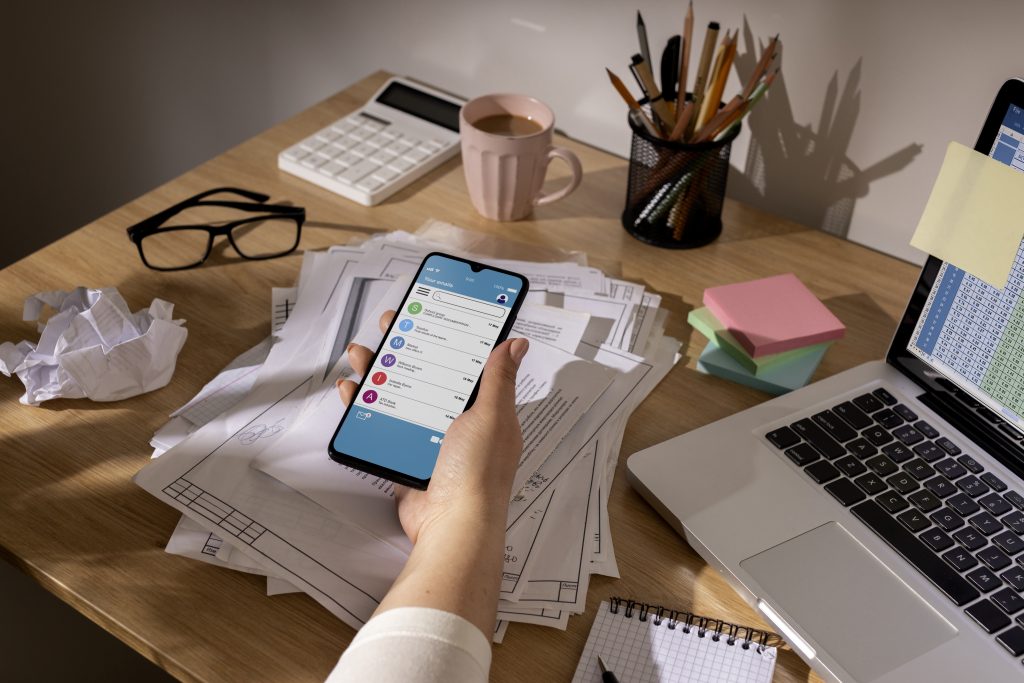
Some productivity software increasingly includes focus modes, distraction blocking and usage insights designed to help users manage attention.
RescueTime, for example, combines automated activity tracking with optional Focus Sessions that can block selected websites and applications.
These features can support healthier routines, but productivity software should not be presented as a substitute for professional mental-health care or as a guaranteed solution for burnout.
Deeper Integration Between Apps
The productivity ecosystem is increasingly connected through APIs, integrations and automation platforms.
Toggl Track currently integrates with more than 100 tools, while Todoist supports calendars, communication services and automation connections.
The practical advantage is that users can keep specialized applications while reducing repetitive data entry between them.
How AI Is Changing Productivity Apps in 2026
AI features have moved from experimental add-ons into the core interfaces of several major productivity platforms.
The most useful implementations tend to work with information already contained in a user’s workspace, such as meetings, messages, tasks or project documentation.
This makes AI particularly useful for summarization and retrieval, although generated outputs should still be reviewed for accuracy.
Notion AI and Connected Knowledge
Notion currently allows eligible users to search their workspace and connected services through its AI tools.
Its AI Meeting Notes feature can transcribe supported meetings, summarize discussions and extract action items.
These capabilities are useful for knowledge-heavy workflows where employees otherwise spend significant time searching scattered information.
AI Inside Team Workflows
Asana’s 2026 releases emphasize agentic work management and prebuilt AI teammates for selected organizational processes.
Slack is similarly integrating AI directly into search, summaries, meeting notes and workspace assistance.
The trend is toward AI that operates inside existing productivity systems rather than requiring users to manually copy information into a separate tool.
Privacy and Security Should Be Part of App Selection
Productivity applications can hold emails, customer information, calendars, internal discussions, documents and meeting transcripts.
Adding AI can increase the amount of information processed by a platform or its subprocessors, making security and data-retention policies particularly important for organizations.
Businesses should review permissions, administrator controls and privacy documentation rather than evaluate software solely on features.
AI Meeting Tools Require Extra Attention
AI meeting transcription can create detailed and potentially sensitive records that previously existed only as spoken conversations.
Notion and similar platforms provide features for generating meeting notes from audio and transcripts, making consent and responsible data handling important considerations.
Organizations should establish clear policies covering recording, participant consent, access, retention and deletion of meeting information.
How to Avoid Productivity-App Overload
Using too many productivity applications can create the same fragmentation that these tools are intended to eliminate.
When tasks are distributed across multiple platforms while conversations and documents remain elsewhere, users may spend unnecessary time searching for information.
The objective should be to build a coherent productivity system rather than accumulating the largest possible collection of applications.
Give Each Tool a Clear Role
For example, a team might use Asana for project ownership, Slack for conversation, Google Workspace for documents and Toggl Track for billable time.
Another organization may perform most of those functions inside Microsoft Teams, Planner and Microsoft 365.
Both structures can work if everyone understands which platform is the authoritative source for each type of information.
2026 Productivity App Comparison
Frequently Asked Questions About Productivity Apps
What are the best productivity apps in 2026?
Strong options include Notion, Todoist, Asana, Trello, Microsoft Teams, Slack, Canva, Adobe Creative Cloud, Toggl Track and RescueTime, with the best choice depending on your workflow.
Which productivity app is best for personal tasks?
Todoist is a strong option for straightforward personal task management, while Notion may suit users who also want notes, databases and more customizable planning.
Which app is best for project management?
Asana works well for structured team projects, while Trello is often easier for visual and less complex workflows.
Which productivity apps use AI in 2026?
Platforms including Notion, Asana and Slack now integrate AI features into selected search, content, automation and workflow functions, although availability can depend on the plan.
What is the best app for tracking time?
Toggl Track is designed around project and client time reporting, while RescueTime is more focused on automatically analyzing digital activity and reducing distractions.
Do I need several productivity apps?
Not necessarily. Start with the smallest number of tools that solve your actual workflow problems and add another app only when it provides a clear function your current system does not handle well.
Looking Ahead
The 10 best productivity apps to make your life easier in 2026 show how productivity software is becoming increasingly connected, automated and AI-assisted.
The most important trend is not simply adding more AI or more features, but reducing the number of steps between identifying work and completing it.
Whether you choose Notion, Todoist, Asana, Trello, Teams, Slack, Canva, Adobe Creative Cloud, Toggl Track or RescueTime, the best productivity system is ultimately the one you can use consistently without creating additional complexity.